


The Making of a Temple Complex: How Indian Temples Grew Over Centuries

Ar. Parnavi Bangar
'The temple is not a mere house of God; it is a representation of the universe.'
~ Stella Kramrisch
A Temple Was Not Built in a Day:
When we imagine Indian temple complexes, we often picture huge spaces with towering gopurams, large courtyards, beautifully carved pillars, and multiple shrines. But most of these grand complexes did not begin this way.
They started as simple temples: a garbha-griha, the sanctum where the main deity was placed. Over generations, different kings and rulers added new spaces around this sacred centre, slowly transforming a small shrine into a large temple complex.
The first addition was usually a pradakshina path. Later rulers added spaces such as ardha-mandapas, ranga-mandapas, kalyana-mandapas, sabha-mandapas, and other pavilions for different activities and rituals. Eventually, a powerful ruler enclosed the entire complex with prakara walls and grand gopurams, creating the monumental temple landscapes we see today.

The Temple Grew Around Its Sacred Centre:
The growth of a temple complex was not random. Every new structure was carefully planned around the original garbha-griha.
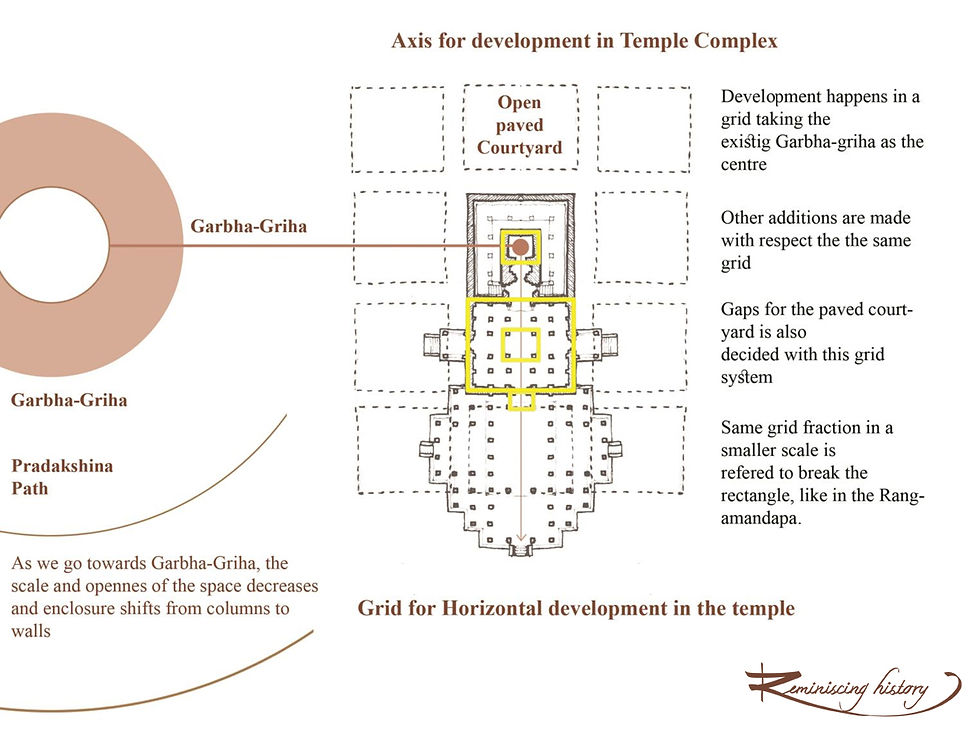
The sanctum remained the centre, and all further development followed the same axis and grid system. The placement of mandapas, courtyards, subsidiary shrines, and gateways was decided in relation to this central point.
There is another aspect of philosophy involved when it comes to the designing of these spaces, which is deeper than even the study of architecture. It is the influence of Hindu philosophy put into architecture. To read more about that, click on this link.
The Hidden Grid Behind Temple Planning:
The making of a temple complex followed a carefully developed grid system over centuries.
The existing garbha-griha acted as the reference point, and all new structures were aligned according to the same grid. The open paved courtyards, halls, and smaller architectural divisions were also planned using this system.
In spaces like the ranga-mandapa, the larger rectangular spaces were further divided using smaller fractions of the same grid, creating a sense of proportion and order.
This method allowed temples to expand over centuries without losing their original design logic.
This grid works in a horizontal system, while vertically, it follows different principles. Every new structure added to the complex is generally taller than the previous one. This development is associated with the impact and importance of the ruler in power. Learn more about vertical development in temple complexes on this link.
“Indian architecture is not a mere expression of the spirit of the age, but a continuous evolution of forms and ideas.”
~ Satish Gujral
The making of a temple complex was not just about adding more buildings. All these rules and decisions were developed through centuries of observation, analysis, and refinement in temple architecture. This evolution can be seen through the changing temple styles from Aihole, Badami, Pattadakal, and Lakkundi to Hampi. Over time, these architectural ideas developed into distinct styles across India, each influenced by its geography, materials, culture, and traditions.
Reference Books and links
Author: Ar. Parnavi Bangar
All pictures and All rights reserved ©Parnavi Bangar, Reminiscing History
Find out more about our upcoming 'Hampi Yatra' here:
Have a story you want to share?
Tap on the link below to tell us your stories and insights about monuments and heritage. Let's collaborate on spreading the word about our history.



Comments